
Introduction – Why storage is crucial now
With the latest update to the German New Psychoactive Substances Act (NpSG), 1SB-LSD and related derivatives are prohibited from trading and distribution. For many, this ends the legal way to obtain them – while numerous customers already have ordered goods on their way or have recently received them.
Especially after a ban, a very practical question arises:
How do I store what I have already legally acquired in such a way that it remains chemically stable and does not degrade unnecessarily?
This article combines scientific principles regarding the stability of LSD derivatives with concrete, easily implementable storage recommendations for three typical forms:
- Blotter
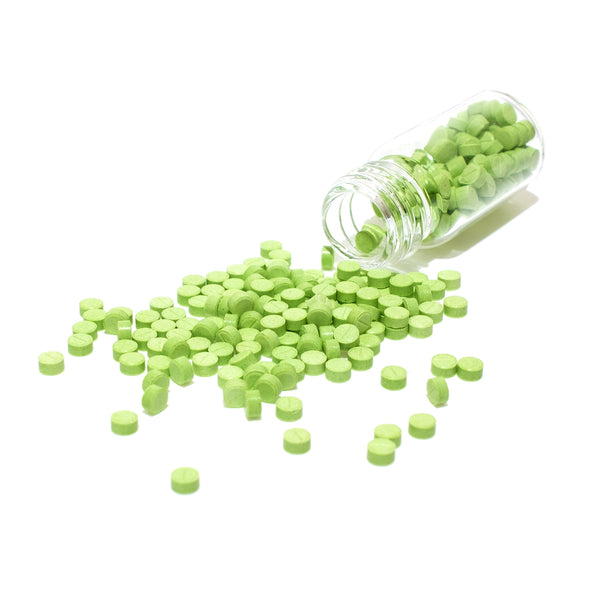
- Pellets
- Dropper Bottles (Solutions)
No chemistry degree, no laboratory – but with the necessary background to understand why certain storage conditions are useful.
Scientific principles: light, heat, humidity, oxidation
LSD and LSD derivatives such as 1SB-LSD belong to the lysergamide class – indole-based compounds that are structurally relatively complex and simultaneously sensitive to environmental influences. Studies and reviews on the stability of LSD consistently identify the same main factors that determine its degradation.
Light (photodegradation)
Many psychotropic substances, especially those with indole or aromatic systems, degrade under light, particularly UV light. Several studies have shown that light exposure leads to significantly faster degradation of LSD than storage in the dark.
In short:
- UV and sunlight → accelerated degradation
- Dark storage → significantly more stable
Therefore, pharmaceutical studies and safety data sheets repeatedly contain recommendations such as "light sensitive – protect from light".
Temperature (thermal decomposition)
Like almost all organic molecules, lysergamides degrade more rapidly at higher temperatures. A classic study on LSD stability, for example, compared solutions at different temperatures in the dark: at moderate temperatures, LSD remained largely stable for several weeks, while at significantly elevated temperatures, a noticeable loss of substance was observed.
Note:
- Constant, rather low temperatures are better than heat.
- Strong heating (e.g., radiators, car in the sun) should be strictly avoided.
Moisture (hydrolysis)
Water is a key factor in chemical degradation:
- Many decomposition processes only occur in solutions.
- Moisture can be absorbed on paper (blotter) or in open environments, which promotes hydrolysis processes.
Studies show that indole and lysergamide systems exhibit increased sensitivity to pH and moisture; they are usually more stable in dry, slightly acidic environments and in the solid state.
Oxygen & Oxidation
Oxygen – often in conjunction with traces of metal ions – can catalyze certain degradation pathways. An LSD stability study demonstrated that even small amounts of metal ions in buffer solutions significantly accelerate degradation, while complexing agents can mitigate this effect.
In everyday life, this doesn't mean you should use chelation therapy – but:
- tightly sealed containers and
- Minimizing air exchange is clearly advantageous.
What studies on the stability of LSD derivatives show
Specific data for 1SB-LSD are still scarce in the literature, but due to its close structural similarity to LSD, many findings can be cautiously transferred.
Some key findings from the research:
- A well-known study on LSD stability examined various storage conditions (light, temperature, pH, container material). Result:
- In the dark and at moderate temperatures, LSD remained relatively stable for weeks.
- Under elevated temperature or light exposure, a loss of concentration occurred significantly faster.
- Recent studies on the formulation of LSD for clinical trials emphasize the importance of light protection (e.g., amber glass, lightproof capsules) and controlled temperature management to protect the active ingredient during manufacturing and storage.
- Reviews on the photodegradation of psychotropic drugs show that many substances in this class degrade significantly under realistic light conditions, and therefore "protect from light" is not just a formal instruction, but practically very relevant.
In short:
Dark, cool, dry, airtight is not a marketing phrase for LSD derivatives, but rather a practice derived directly from studies.
Blotter vs. Pellets vs. Dropper – why the stability differs
Although the active ingredient is chemically similar, it behaves differently depending on the dosage form:
Blotter
- The active ingredient is distributed throughout the paper fibers, often in very small quantities.
- Large surface area → sensitive to light and moisture.
- Paper can absorb water from the air and is rarely airtight.
Blotters are therefore particularly susceptible to:
- Fading due to light
- chemical changes caused by moisture
Pellets
- The active ingredient is present as a solid material in compact units.
- Pellets are usually packaged in sealed cans or blisters.
- Solid, compact form = somewhat more robust against humidity and light (if packaged).
Nevertheless, the following applies:
- Heat can also accelerate degradation here.
- Open or poorly sealed containers allow moisture and air to reach the material.
Dropper Bottles (Solutions)
- The active ingredient is completely in solution, meaning it is chemically "active" in a solvent.
- Advantages: homogeneous distribution, easy dosing in the laboratory.
- Disadvantages: Degradation processes occur faster in solution than in solid form.
Especially important:
- Light protection (brown glass, light-tight storage)
- Temperature stability (no intense heat, no extreme fluctuations)
- Tight seal to limit evaporation and atmospheric oxygen.
Specific storage recommendations – easy to implement
The following tips do not replace the information in the Safety Data Sheet (SDS) or from your manufacturer, but are a practical supplement based on scientific principles.
1. Blotter
Objectives: dark, dry, cool, airtight
- Keep the original packaging and, if possible, place it in an additional airtight bag (e.g., a zip-top bag).
- Place this bag in an opaque box or drawer.
- Do not store on the windowsill, in the car or in rooms with highly fluctuating humidity (e.g. bathroom).
- Optional: a small, commercially available desiccant packet (silica gel) in the box helps to reduce moisture.
2. Pellets
Goals: tightly sealed, no heat, low humidity
- Leave the pellets in the original container/packaging and carefully reseal it after each opening.
- Store the can in a dark and cool place, e.g. in a drawer or box away from radiators.
- Do not constantly remove the opening and leave it open – every opening lets in air and moisture.
3. Dropper Bottles
Objectives: protected from light, temperature-stable, upright, well-sealed
- Always store droppers upright to ensure a clean seal.
- Immediately close the bottle tightly after use.
- Protect brown glass bottles from light (e.g., cardboard box, drawer).
- Do not store directly next to electronics or radiators; also not on sunny windowsills.
- Avoid strong temperature changes if possible (e.g., going from very cold to warm and back several times a day).
What to do if dropper bottles recrystallize?
Recrystallization means:
Visible crystals or deposits form in the solution because the active ingredient is no longer completely soluble under the prevailing conditions.
Why does this happen?
Typical reasons:
- Temperature drop: In many solvents, the solubility of the active ingredient decreases at lower temperatures. If the bottle is stored at a very cool temperature, for example, some of the substance may settle out again as a solid.
- Solvent evaporation: If the seal is not 100% airtight, some solvent can escape over a longer period. The remaining liquid is then highly concentrated – also a recipe for crystal formation.
- Long storage time: Over time, micro-changes in the solvent/water content can occur, which can alter the solubility.
What can be done without legal problems?
Important: No experiments with heat, no risky manipulations.
Safe, simple steps include:
- Allow to slowly come to room temperature
- If the bottle has been stored very cold, do not warm it up suddenly, but simply leave it at normal room temperature for a while.
- Leave the bottle to stand still.
- Often, constant conditions are enough for some of the crystals to dissolve again.
- Very careful tilting
- When the solution appears clearer again, you can gently tilt the bottle several times (do not shake vigorously) to mix the dissolved and undissolved areas.
If visible crystals persist or the solution remains cloudy, homogeneity is no longer guaranteed. The solution is then unsuitable for precise laboratory applications; in this case, it is safest to...
- to no longer use the solution for quantitative purposes and
- If in doubt, ask the manufacturer or obtain a fresh reference solution.
Not recommended:
- No heating on radiators,
- no hot water bath,
- No addition of proprietary solvents or other substances.
Common storage mistakes
Some typical things that can massively affect stability:
- direct sunlight (windowsill, glass table)
- Heat sources (heating, above warm electronic devices, car in summer)
- humid environments (bathroom, kitchen without good ventilation)
- open or poorly sealed containers
- Frequent opening of droppers or cans unnecessarily
- unlabeled containers where origin and date are no longer clear
Anyone who consistently avoids these mistakes has already completed 80% of the warehouse work.
Legal classification (NpSG) – brief & neutral
The new regulation lists 1SB-LSD and certain related substances such as NB-DMT and NB-5-MeO-MiPT as new psychoactive substances in the NpSG annex.
The NpSG contains a comprehensive ban on contact (§ 3 NpSG), including for:
- Produce
- trade
- Placing on the market
- Bringing into/out of the area of application
- Acquisition and possession
However, not all prohibited forms of handling are punishable. The main offenses are trafficking, distribution, administration, and manufacturing-related activities (§ 4 NpSG). According to prevailing opinion, possession and acquisition are not punishable, even if they formally fall under the prohibition of § 3.
Key points in simple language:
- The state primarily wants to prevent distribution, trade, and dissemination.
- The focus under criminal law is on sale, distribution, import, and production.
- While mere possession can have administrative consequences (seizure/destruction), it is not currently considered a criminal offense under Section 4 of the NpSG.
This article is not a substitute for legal advice . For individual questions regarding the legal situation, you should consult a qualified lawyer.
Conclusion
1SB-LSD and similar derivatives are being legally banned – but the chemical molecules continue to follow the same physical rules as before.
The good news: With a few well-understood measures, you can significantly improve the stability of your existing blotter, pellet, and dropper solutions:
- Store in a dark place (away from direct light)
- Keep cool , but do not expose to extreme temperatures.
- Pack in a dry and airtight container if possible
- Handle solutions with particular care and pay attention to recrystallization.
The better you understand the mechanisms behind the effects of light, temperature, humidity, and oxidation, the clearer it becomes:
Good storage is no secret – it is the result of a few simple but consistently followed principles.